 Canadian and Family Owned
Beyond the Plate: How AI-Driven Menu Insights Are Changing Profit Control for Restaurants

Beyond the Plate: Delivering True Profit Control to Independent Kitchens
Running an independent restaurant has always required a delicate balance between culinary creativity and operational discipline. Today, that balance is harder to strike than ever. Between shifting market prices, manufacturer-driven packaging and cost adjustments, evolving supply chains, and tightening labour markets, independent operators are navigating constant margin pressure.
In this climate, gut feel, rough food cost estimates, and week-old spreadsheets don't hold up. Profitability isn't usually lost on the big, obvious line items — it's lost quietly, across shifting case yields, small packaging changes from manufacturers, and menus priced around purchasing numbers that are months out of date.
Why Static Menu Pricing Quietly Costs You
Most menus are priced once, based on a snapshot of ingredient costs at the time, and then left alone for months or longer. But ingredient costs don't stay still — a case size changes, a commodity price shifts, a substitute ingredient gets swapped in during a supply crunch. Each of these is small on its own, but they compound. By the time anyone revisits the math, a dish that looked profitable on paper may have been quietly losing money for months.
For independent operators without a dedicated analytics team, catching this in time has traditionally meant manually recalculating recipe costs — a task that's easy to deprioritize when the kitchen is busy, and easy to get wrong by hand even when there's time for it.
What Real Profit Control Looks Like Today
A newer generation of food-costing tools is changing that equation by keeping recipe costs tied to live purchasing data instead of a one-time snapshot.
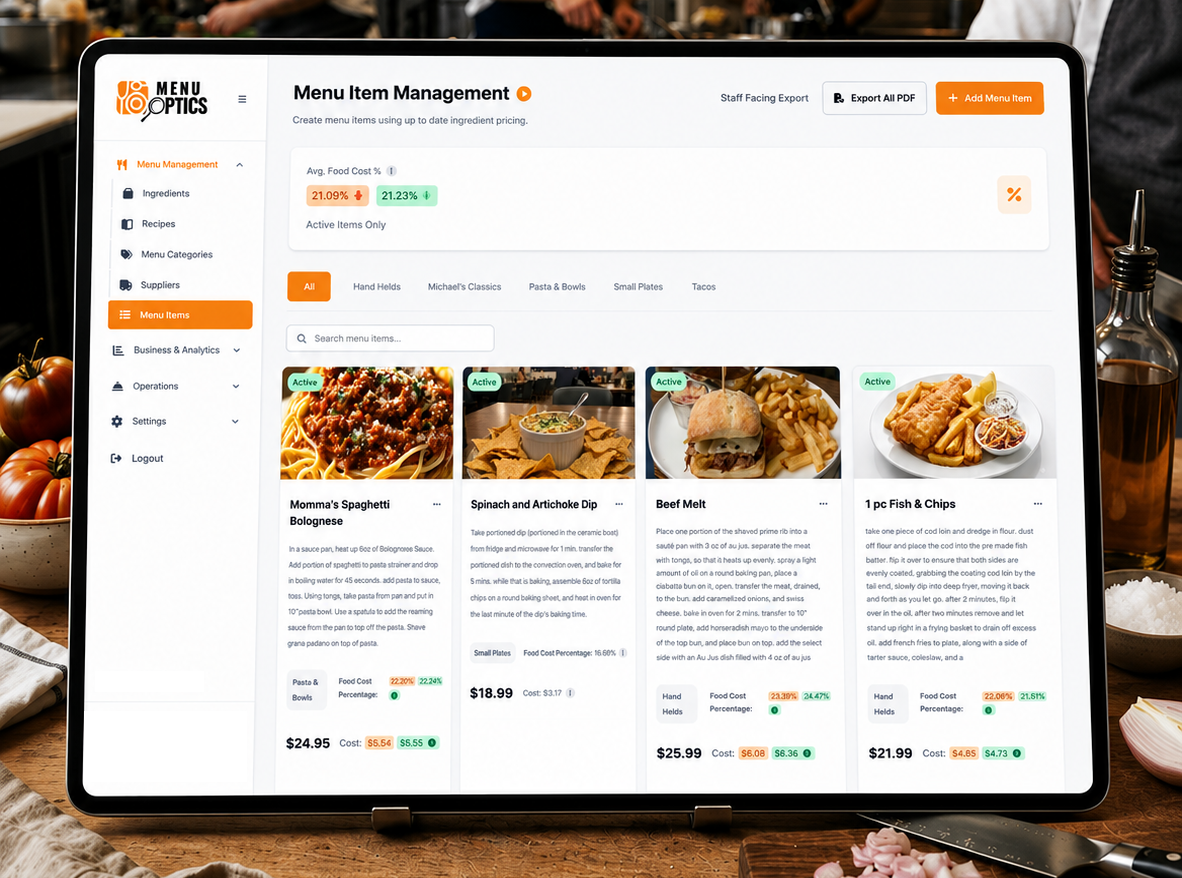
Recipe and plate costing that updates itself. Instead of manually recalculating a dish's cost every time a supplier adjusts a pack size or a commodity price moves, ingredient-level recipes can update automatically — so the contribution margin on a dish reflects what it actually costs today, not what it cost when the menu was last printed.
Menu engineering, not just menu design. This is where the well-known "stars and dogs" framework comes in — classifying dishes by profitability and popularity to see which items deserve a bigger push, a reprice, or a rework. What's changed is that this kind of analysis can now run continuously against a concept's actual sales mix, instead of being a one-time consulting exercise done once a year.
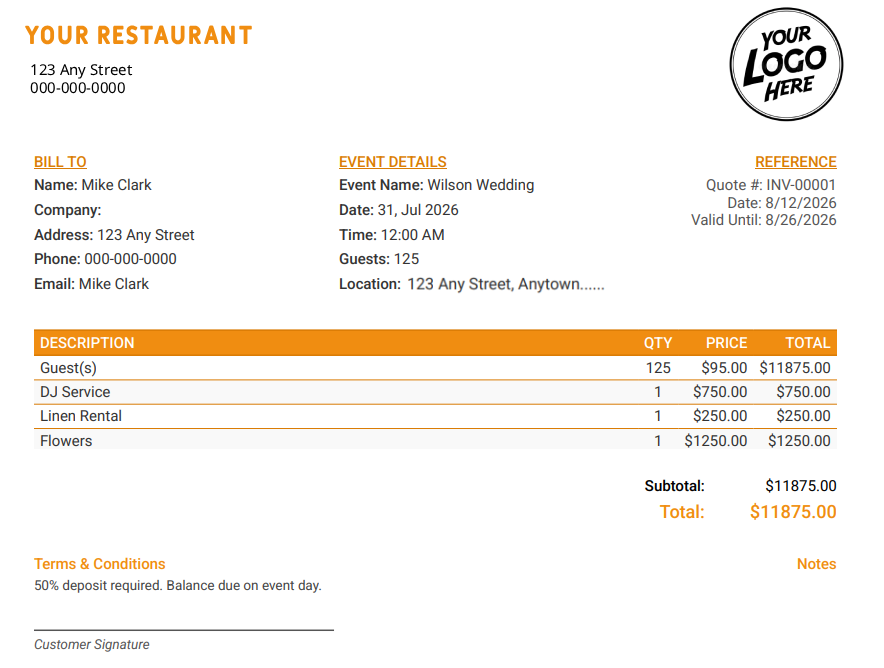
Confident catering and event quoting. For operators who take on banquets or private events, knowing the real projected margin before a quote goes out — rather than finding out after the fact — removes a lot of the guesswork that used to eat into these jobs' profitability.
The Data-Entry Problem Nobody Talks About
The honest reason many kitchens don't use tools like this isn't a lack of interest — it's that keeping recipe costs accurate has historically required hours of manual data entry: item codes, unit conversions, and shifting case costs, re-keyed by hand every time something changes. For a chef or kitchen manager already stretched thin, that's often the first thing to get skipped.
This is the piece Flanagan Foodservice and Menu Optics have been working on together. By connecting Flanagan's catalog and invoice data directly into the Menu Optics platform, purchasing data — item codes, pack sizes, actual invoice costs — flows in automatically instead of being keyed in by hand. Delivered invoices sync into the inventory module, so stock on hand and usage stay reconciled without the manual count reconciliation that usually falls to month-end.
It's worth being upfront about what this does and doesn't solve. Automatic data sync keeps recipe costs closely aligned with real purchasing costs, which closes most of the gap between paper margins and real ones — but no system, AI-assisted or otherwise, replaces a final human check before a price or a plate goes out. Treat the numbers as a strong starting point, not the final word.
The Bigger Picture
Great food still builds a restaurant's reputation. But in a margin environment this tight, the operators protecting their future are the ones pairing that reputation with real visibility into their actual costs — not the ones re-pricing their menu once a year and hoping the math still holds.
If this is a gap in your own operation, it's worth a conversation with your Flanagan Territory Manager about how the Menu Optics partnership works and whether it's a fit for your kitchen.